
Submit the contact form or call KFM with your project details. KFM responds within 1 business day to acknowledge your enquiry and clarify the scope.
KFM reviews the project documentation, site address, and requirements, then issues a fee proposal and scope of works within 2–3 business days.
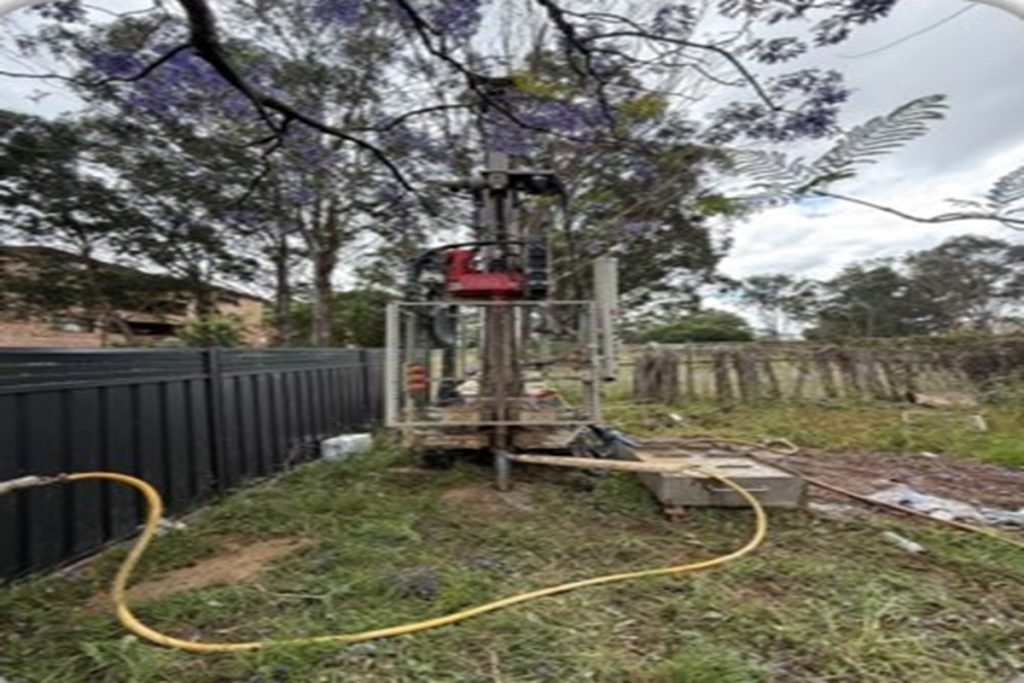
Field works are mobilised, including drilling, sampling, and in-situ testing, supervised by a senior engineer or geologist.
Collected samples are tested in accordance with relevant Australian Standards
Data is analysed, engineering recommendations are prepared, and a draft report is issued for client review.
Where required, KFM provides on-site inspections, certificates, and real-time geotechnical advice during excavation, filling, or piling.
KFM’s work is informed by relevant Australian Standards, council requirements, and project-specific engineering guidelines where applicable.
Geotechnical Site Investigations
Residential Slabs & Footings
Earth-Retaining Structures
Transport for NSW Guidelines
Local Council Requirements
Can’t find the answer? Call our engineering team directly.
It depends on site access, the number of boreholes and the testing required. For a typical residential or small commercial site, fieldwork is usually completed in one day, laboratory testing takes a further 3–5 business days, and the report is issued 2–3 business days after results are received. Rock coring, CPT programs and larger sites take longer. KFM confirms the program in the fee proposal before mobilising.
There is no fixed number. It depends on the site area, the proposed structure, how variable the ground is, and the requirements of AS 1726 and your council. A single dwelling may need two or three test locations; a multi-storey building over a basement usually needs boreholes across the footprint plus rock coring. KFM scopes the number and depth to your project and states them in the proposal.
In most cases, yes. Councils across NSW commonly require a geotechnical report to support a development application, particularly where there is excavation, a basement, sloping ground, landslip risk, or a site classification requirement. Requirements vary by council and development type, so it is worth checking the conditions that apply to your site — KFM can review them with you.
AS 1726 is the Australian Standard for geotechnical site investigations. It sets out how ground investigations are planned, how soil and rock are described and classified, and how findings are reported. Working to AS 1726 means your report uses consistent, recognised terminology that structural engineers, certifiers and councils can rely on, and that another engineer can interpret the same data the same way.
Yes. KFM provides construction-phase support including footing inspection and acceptance, piling platform inspection, piling supervision, in-situ testing (DCP and plate load), proof roll testing, crane pad assessment, batter and trench inspection, anchor and soil nail acceptance testing, and haul road and ramp inspection.
You hear about it from site, not at report stage. If conditions differ from what was expected — shallower or deeper rock, groundwater, fill, or signs of contamination — KFM contacts you to discuss the implications and agree how to proceed, whether that means extending a hole, adding a test location, or re-scoping. Any change to the agreed scope or fee is confirmed with you before the extra work is done.
Talk to our engineering team about your project requirements. We’ll clarify the scope, advise on investigation methodology, and provide a fixed-fee proposal.