
Submit the contact form or call KFM with your project details. KFM responds within 1 business day to acknowledge your enquiry and clarify the scope.
KFM reviews the project documentation, site address, and requirements, then issues a fee proposal and scope of works within 2–3 business days.
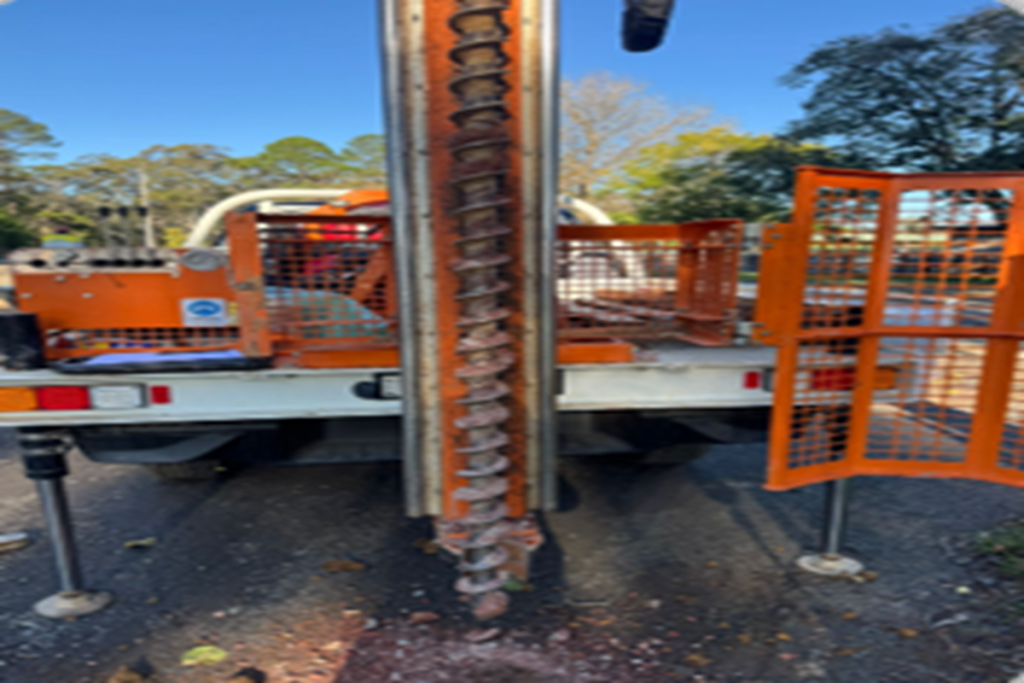
Field works are mobilised, including drilling, sampling, and in-situ testing, supervised by a senior engineer or geologist.
Collected samples are tested in accordance with relevant Australian Standards
Data is analysed, engineering recommendations are prepared, and a draft report is issued for client review.
Where required, KFM provides on-site inspections, certificates, and real-time geotechnical advice during excavation, filling, or piling.
KFM’s work is informed by relevant Australian Standards, council requirements, and project-specific engineering guidelines where applicable.
Geotechnical Site Investigations
Residential Slabs & Footings
Earth-Retaining Structures
Transport for NSW Guidelines
Local Council Requirements
Can’t find the answer? Call our engineering team directly.
Typically test pits or cored holes through the existing pavement to record layer thickness and condition, DCP testing and CBR assessment of the subgrade, and laboratory testing of the materials recovered. On in-service roads, falling weight deflectometer (FWD) testing is used to assess structural capacity without opening up the pavement.
Yes. KFM prepares flexible, rigid and full-depth pavement designs in accordance with Austroads and TfNSW requirements, and uses CIRCLY for mechanistic pavement analysis.
California Bearing Ratio is a measure of subgrade strength. It is the main input that sets how thick the pavement layers need to be, which is why councils and certifiers ask for it before approving a pavement design.
Falling weight deflectometer testing applies a controlled impulse load to the pavement surface and measures the resulting deflection bowl. On existing pavements it is used to back-calculate layer stiffness and remaining structural life, so rehabilitation can be targeted rather than guessed.
Yes. KFM’s pavement design covers highways, local roads, car parks and industrial pavements, including heavy-duty pavements carrying concentrated wheel and container loading.
Yes. KFM investigates the cause — subgrade weakness, moisture, insufficient layer thickness, or material breakdown — using in-situ and laboratory testing, then sets out rehabilitation options rather than defaulting to full reconstruction.
Talk to our engineering team about your project requirements. We’ll clarify the scope, advise on investigation methodology, and provide a fixed-fee proposal.